Does a robot actually bring more people in?
Yes. The evidence goes back almost a decade, and the robots have improved a lot since then. Here are 3 examples that demonstrate how:
 SoftBank
🎉 Retail · 📍 Santa Monica, USA
Case study 1: Week-long Pepper 'internship' that paid for itself
store revenue in December
SoftBank's Pepper greeted shoppers at the door, chatted, answered questions and pointed people to the products it was promoting. Footfall jumped 70% during the week, and the products Pepper talked about sold six times faster.
 Unitree
🎉 Promotion · 📍 Almaty, Kazakhstan
Case study 2: How Unitree G1 turned the crowd into marketers
1.5M+
organic social views
A Unitree G1 became the centerpiece of a mall activation, pulling in crowds and giving visitors something they wanted to film and share. The robot helped turn a standard opening into a high-traffic, highly shareable experience.
 Promobot
🎉 Hospitality · 📍 Dubai Mall, UAE
Case study 3: Promobot V4 at restaurant - cheap leads that came back
A wheeled promobot outside the restaurant collected contacts and handed out offers. Each lead cost about 40 US cents, and more than a third of the people who spoke to it came back to eat that day.
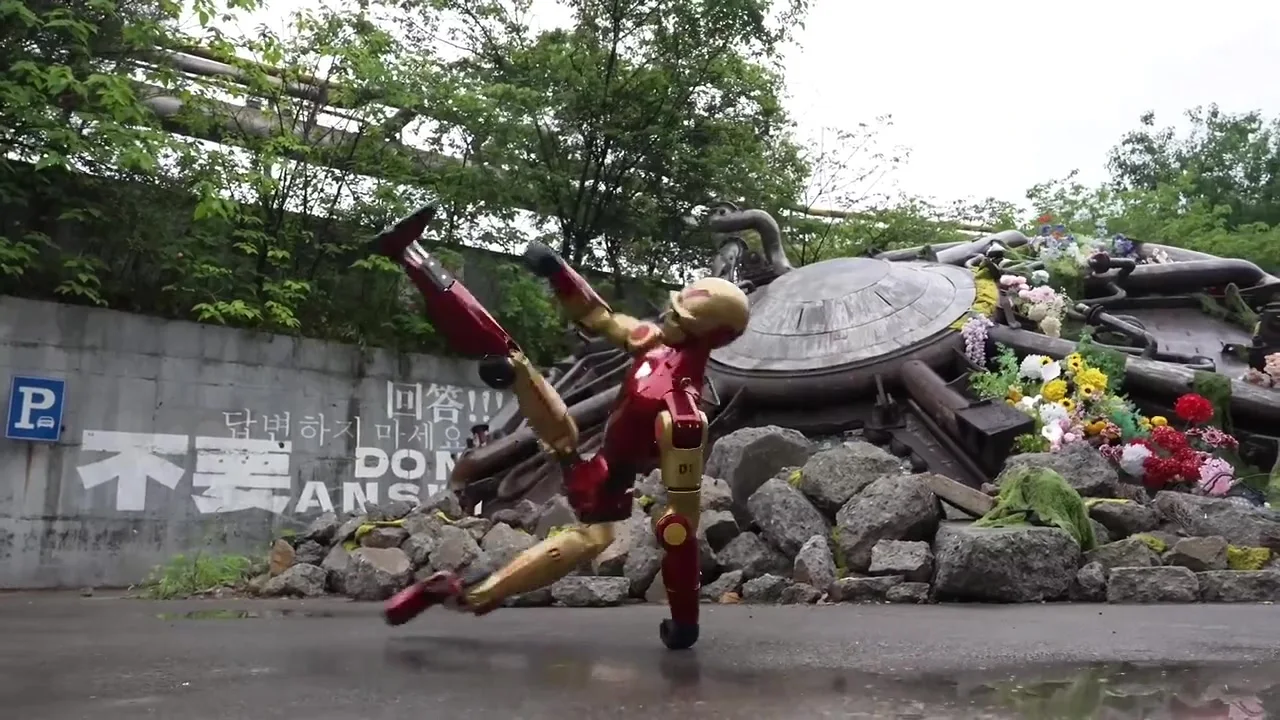
Why it works: A t-shirt, banner, a flyer or a screen asks people to look. A robot doing back-flips gives them a reason to stop, get closer, take a photo and tell their friends. Every one of those photos carries your brand.
▶ Video: Boxing with a Unitree G1 humanoid at CES 2026 (video by Peter Kappes)
Why do robots draw crowds and cameras?
A humanoid walking through a crowd is still rare enough that people stop and film it. That pull now works at global scale. At China's 2026 Spring Festival Gala, which logged 23.06 billion views across TV and online, AI and humanoid robot acts drew 20.99% of all audience attention, a 5.4-fold jump on the year before. Unitree humanoids did parkour, drunken-fist kung fu and nunchaku. Days later, 49 G1s performed synchronised kung fu at Beijing's Temple of Heaven.
▶ Video: Unitree's G1 humanoids at the Temple of Heaven (official Unitree Robotics video)
Trade shows see the same effect. At VivaTech 2026 in Paris, a record 200,000+ visitors and 5 billion social media impressions, the organisers picked a thought-controlled Unitree humanoid as one of the show's standout innovations. In September 2026, Unitree humanoids and dancer Wu Yufei reached the final of America's Got Talent.
▶ Video: Unitree and Wu Yufei in the America's Got Talent 2026 final (official AGT video)
Notice the human on stage. The best robot moments pair the machine with a host, a dancer or your brand ambassador.
Demand follows the attention. Over China's 2026 Spring Festival holiday, more than 54% of robot rental orders were for New Year greetings, temple fairs and shopping-mall shows. One large rental platform told People's Daily that it expects the market to grow roughly tenfold in 2026. At your event you get the same pull in person, with your logo in the shot. Every phone that comes out is free reach.
Where does a robot earn its fee?
| Occasion |
What the robot does |
Best robot type |
What to measure |
|
Trade shows & exhibitions
|
Performs every hour, roams the aisles, pulls visitors to your booth |
Small humanoid + promobot |
Booth visits, badge scans |
|
Conferences & corporate events
|
Stage entrance, keynote reveal, welcomes guests |
Full-size or small humanoid |
Social mentions, session fill |
|
Store openings & retail
|
Greets at the door, demos products, entertains the queue |
Promobot or small humanoid |
Footfall, featured-product sales |
|
Product launches
|
Creates the reveal moment, carries the product on stage |
Humanoid |
Press pick-up, video views |
|
Mall events & pop-ups
|
Roams as an attraction, anchors a branded photo spot |
Robot dog or small humanoid |
Photos taken, dwell time |
|
Sampling & sign-ups
|
Hands out samples, points guests to a QR code |
Promobot |
Cost per lead |
|
Brand content & social
|
Stars in the shoot, the reel or the stunt |
Humanoid or robot dog |
Views, shares, follows |
|
Weddings, galas & parties
|
Entertains and welcomes guests |
Small humanoid or robot dog |
Guest photos, talk-about value |
What does it cost?
Less than most people expect, and less than a lot of booth furniture. Most renters quote by the day, usually including an assistant operator. As of September 2026, RoboHours' global average for a Unitree G1 humanoid is around $2,704 per standard 8-hour day. In China, humanoids start at about $517 a day.
Where you book matters a lot. The same robot can cost six times more in one city than in another. Our guide shows how prices compare across the markets we track.
See the price comparison by city →
What's different about events?
-
Battery life: a small humanoid runs about two hours per battery, so plan shows in bursts with charging breaks, or book spare batteries or two robots.
-
Noise: voice chat struggles in loud halls. Use a quieter corner or a remote control (often available via smartphone app).
-
Crowds: walking robots need a clear performance zone, especially during flips and kicks to prevent injuries.
-
Novelty fades: CNN reports rental prices for stunt robots in China are sliding as the novelty wears off. Build a moment around the robot. Standing still, it won't carry your event.
That last point is exactly why renting beats buying for a first deployment.See rent vs buy in our guide →
How to Choose
Which robot should you book? See our top picks
Our shortlist of event robots: the best all-rounder, the best stage presence and the best greeter, with photos, specs and prices.
Open the top picks →
FAQ
How much does it cost to rent a robot for an event?
Rental estimates vary by robot, location, dates, booking length and what is included. Browse the public catalogue for location-specific published starting estimates; they are estimates, not final prices. The rental operator confirms the final quote, availability, minimum booking and inclusions. Where a day estimate is shown, it is based on an 8-hour workday. Compare prices by city.
Is hiring a robot for an event worth it?
For attention, it is hard to beat. A retail pilot reported increased foot traffic and sales of featured products, but results vary and are not guaranteed. Measure visitors, scans and social posts to understand your own event’s return.
What is the best robot for a trade show booth?
A small humanoid such as the Unitree G1 for scheduled 5–8 minute shows, paired with a robot dog or promobot that roams the aisles and collects sign-ups between shows. Check your space first: a 3 × 3 m booth is tight for a humanoid doing kicks. See our top picks.
Do event robots need an operator?
Most bookings include one to handle set-up, routines and safety. Some operators rent the robot on its own, which is cheaper, but then you're responsible for driving it safely. See what to check first.
How long can an event robot run?
A small humanoid runs about two hours per battery, so plan 5–8 minute shows every hour with charging breaks, ask for spare batteries, or book two robots. Wheeled promobots such as SoftBank Pepper can run most of the day on one charge.
Can the robot wear my branding?
Usually, yes. Operators can add costumes, wraps, custom screen content or a branded photo spot. Ask for branding in the quote and allow extra lead time.
Can I rent a robot for a birthday party or wedding?
Yes. Robot dogs and small humanoids are popular at birthdays, weddings and family celebrations. They arrive with an operator who runs the show and keeps guests, especially children, at a safe distance. See robots near you.
How far in advance should I book an event robot?
Several weeks ahead for busy periods such as major trade-show weeks and holidays. Custom choreography and branding need extra lead time. To lock in a date faster, send the same brief to several operators at once. Get the brief template.